automation · autopilot · 2026-07-05
Optional Autopilot: automation that stays inside your limits
Autopilot is help you turn on, not a black box that runs the book. Goals, hard limits, and an audit log so operators stay in charge.
Many media buyers do not want software deciding everything. That is fine. Waveband is a full buying seat without Autopilot. Autopilot exists for the hours you do not want to spend on pacing checks and bid nudges: optional, bounded, and auditable.
The pitch for algorithmic optimization is decades old. The problem was never capability. It was trust. Black-box optimizers move your money and answer questions with a shrug. Autopilot takes the opposite bet: automation is only useful if you can leave it off, bound it when on, and audit every change.
Goals, not knobs: and only where you enable it
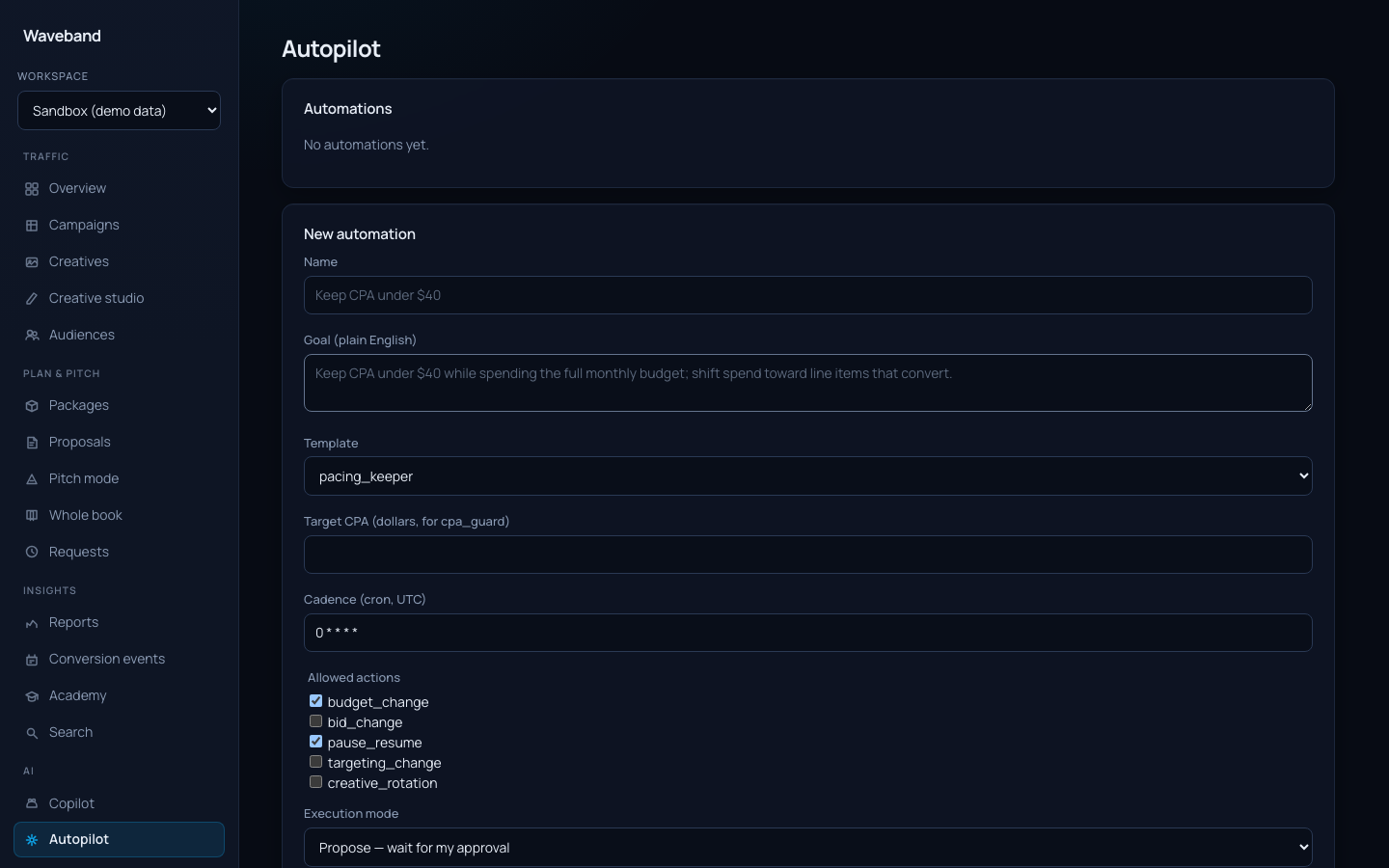
An Autopilot automation starts from a goal you write in plain terms (hold CPA under a target, pace a budget evenly, maximize reach at a frequency cap), plus guardrails: maximum daily spend change, channels it may touch, floors and ceilings on bids.
Campaigns you leave manual stay manual. Nothing opts itself in because a model was confident.
Hard limits before soft recommendations
On each run the automation evaluates current delivery, decides whether an action is warranted, and either acts or explains why it held. Both paths are recorded.
Spend ceilings and channel allowlists are not suggestions. If the action would break a guardrail, Autopilot holds and writes why. That is how operators keep clients from waking up to a surprise channel shift.
- Plain-language goals (CPA, pacing, reach, frequency)
- Maximum daily spend change and bid floors/ceilings
- Channel allowlists so Autopilot cannot wander
- Hold-with-reason when an action would break a guardrail
- Full audit log: inputs, decision, expected outcome
The audit log is the product
Every action carries its reasoning: what the automation saw, what it changed, and what it expected to happen. When a client asks why spend shifted from display to CTV on Tuesday, the answer is a log entry, not a guess.
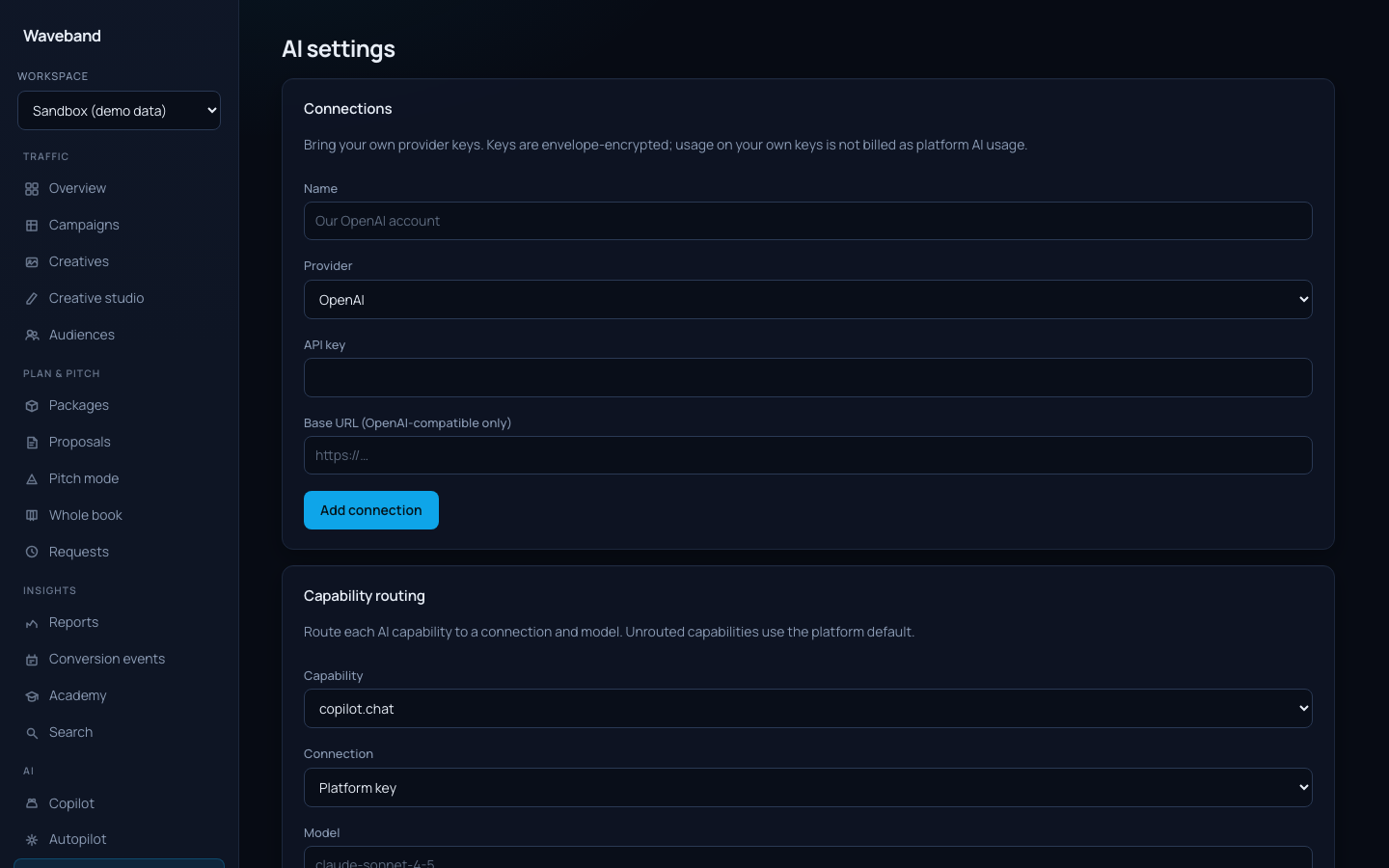
Teams that want deeper control can register their own decision providers (HTTPS endpoints that receive the decision context and return the action) and run them in shadow mode against the built-in logic before trusting them with budget.
Where Autopilot helps (and where it should stay off)
Good fit: even pacing on stable flights, bid nudges inside a narrow band, routine budget shifts across line items you already trust. Poor fit: brand-new clients, unproven creatives, or any flight where the client wants a human name on every change.
Waveband does not make Autopilot the product identity. Access, measurement, and a real seat come first. Automation is optional help on top.
Pair with Signal, not vanity feedback loops
If you automate against platform-only conversions, you amplify the seller's incentives. Prefer goals tied to first-party outcomes from Waveband Signal when the client cares about truth over vanity.
Read the Autopilot docs, start in shadow or tight ceilings, and widen only after the audit log looks boring in a good way.